Pages

Tuesday, June 18, 2024

Knotweed, Bistorta affinis

Scientific Name: Bistorta affinis (previously known as Persicaria affinis)
Common Names: Himalayan Fleece Flower, Lesser Knotweed, Knotweed
Origin: Native to the Himalayan mountains, ranging from Afghanistan to southwestern China.

Description:

Growth Habit: Low-growing, mat-forming perennial, spreading by rhizomes.
Height: Typically 6-10 inches tall (15-25 cm)
Spread: Can spread up to 2 feet (60 cm) wide or more
Leaves: Small, oval to lance-shaped, deep green turning reddish-bronze in autumn.
Flowers: Tiny, pink to red flowers densely packed in upright spikes, blooming from mid-summer to autumn.

Growing Conditions:

Sunlight: Full sun to partial shade.
Soil: Prefers moist, well-drained soil but tolerates a wide range of conditions.
Hardiness: Hardy in USDA zones 4-8.

Uses:

Ground Cover: Excellent for covering slopes, suppressing weeds, and adding color to borders.
Rock Gardens: Thrives in rocky or gravelly soil.
Erosion Control: Helps stabilize soil on slopes.
Pollinator Attractor: Flowers attract bees and butterflies.

Maintenance:

Watering: Water regularly during dry periods, especially in the first year after planting.
Pruning: Can be sheared back in spring to encourage new growth.
Dividing: Divide every few years to control spread and maintain vigor.

Additional Notes:

Not Invasive: Unlike some knotweed species, Bistorta affinis is not considered invasive.
Drought Tolerant: Once established, it becomes fairly drought-tolerant.
Deer Resistant: Rarely bothered by deer.

Monday, June 17, 2024

Welsh onion, Allium fistulosum

The Welsh onion, also known as Allium fistulosum, is a perennial plant in the family Amaryllidaceae. It is widely used in culinary practices around the world, particularly in East Asia. Here are some complete facts about the Welsh onion:

Botanical Information:

Scientific Name: Allium fistulosum
Common Names: Welsh onion, Japanese bunching onion, spring onion, green onion, scallion
Family: Amaryllidaceae
Genus: Allium

Description:

Appearance: The Welsh onion has hollow, tubular leaves that resemble those of the common onion but are usually more erect and slender. The plant does not form a bulb like the common onion; instead, it has a long, white stalk.
Flowers: It produces spherical umbels of white or occasionally light purple flowers on long stalks.

Growth and Cultivation:

Habitat: It prefers well-drained soil and a sunny location but can tolerate partial shade. It is hardy and can withstand cold temperatures, making it suitable for cultivation in various climates.
Propagation: Welsh onions are typically propagated by seed or by dividing clumps of mature plants.
Growth Habit: It is a perennial plant, meaning it can live for more than two years. In mild climates, it can be grown year-round.

Culinary Uses:

Edible Parts: Both the leaves and the white stalk are edible. They are used in a variety of dishes for their mild onion flavor.
Common Dishes: Welsh onions are used in salads, soups, stews, stir-fries, and as a garnish. They are a staple in many Asian cuisines, including Chinese, Japanese, Korean, and Vietnamese.
Flavor: The flavor is milder than that of common onions, making them suitable for raw and cooked dishes.

Nutritional Information:

Nutrients: Welsh onions are rich in vitamins A and C, calcium, and dietary fiber. They also contain various antioxidants and sulfur compounds beneficial for health.
Health Benefits: Regular consumption may contribute to improved digestion, enhanced immune function, and reduced inflammation.

Historical and Cultural Significance:

Origins: The exact origin of the Welsh onion is unclear, but it is believed to have been domesticated in East Asia.
Cultural Importance: In Chinese culture, the Welsh onion symbolizes cleverness and is often associated with good fortune. In Japan, it is a common ingredient in traditional dishes such as miso soup and negiyaki (a type of savory pancake).

Varieties:

There are several varieties of Welsh onions, some of which are bred for specific characteristics such as larger stalks or increased cold tolerance. Notable varieties include:
Kujyo Negi: A Japanese variety known for its long white stalks and sweet flavor.
He Shi Ko: Another Japanese variety valued for its tender, flavorful stalks.

Other Uses:

Companion Planting: Welsh onions can be used in companion planting to repel pests and improve the growth of neighboring plants.
Medicinal Uses: In traditional medicine, Welsh onions have been used to treat colds, coughs, and other respiratory issues.

Interesting Facts:

  • Despite its name, the Welsh onion is not specifically associated with Wales. The name "Welsh" comes from the Old English word "welisc," which means foreign.
  • Welsh onions are sometimes confused with scallions, but they are different plants. However, in culinary contexts, the terms are often used interchangeably.

    The Welsh onion is a versatile and nutritious plant that adds a mild onion flavor to a wide range of dishes, making it a valuable ingredient in many culinary traditions.

  • Saturday, June 15, 2024

    Swiss Chard

    Swiss chard, also known simply as chard, is a leafy green vegetable belonging to the Chenopodiaceae family, which also includes beets and spinach. Here are comprehensive facts about Swiss chard:

    General Information

    Scientific Name: Beta vulgaris subsp. cicla
    Common Names: Swiss chard, silverbeet, perpetual spinach, beet spinach
    Origin: Mediterranean region

    Botanical Characteristics

    Appearance: Swiss chard has large, dark green leaves with vibrant, colorful stems that can be white, yellow, red, or orange.
    Growth Habit: It is a biennial plant grown as an annual for its leaves.
    Height: Typically grows to a height of 1 to 2 feet (30 to 60 cm).

    Nutritional Profile

    Swiss chard is highly nutritious and packed with vitamins and minerals:

    Vitamins: Rich in vitamins A, C, E, and K.
    Minerals: Contains magnesium, manganese, potassium, iron, and calcium.
    Antioxidants: High in antioxidants, including beta-carotene and lutein.
    Fiber: Good source of dietary fiber.

    Health Benefits

    Anti-inflammatory: Contains phytonutrients that reduce inflammation.
    Bone Health: High in vitamin K, which is important for bone health.
    Heart Health: Contains potassium and magnesium, which help regulate blood pressure.
    Eye Health: Rich in lutein and zeaxanthin, which are beneficial for eye health.

    Culinary Uses

    Versatility: Swiss chard can be used in a variety of dishes, such as salads, soups, stews, and sautés.
    Preparation: Both the leaves and stems are edible, but the stems often require longer cooking times than the leaves.
    Flavor: The leaves have a slightly bitter taste, while the stems are somewhat sweet and earthy.

    Cultivation

    Growing Conditions: Prefers well-drained soil and full sun to partial shade.
    Planting Time: Can be planted in early spring and late summer; tolerates light frost.
    Harvesting: Leaves can be harvested continuously by cutting them off near the base, allowing the plant to produce new growth.

    Varieties

    Fordhook Giant: Known for its large, dark green leaves and thick white stems.
    Bright Lights: Features stems in a rainbow of colors, including red, orange, yellow, and pink.
    Lucullus: Has pale green leaves and white stems, known for its mild flavor.

    Environmental Impact

    Sustainability: Swiss chard is considered a sustainable crop as it is hardy, has a long growing season, and requires relatively low inputs of water and fertilizer.
    Pest Resistance: Generally resistant to pests and diseases, making it easier to grow organically.

    Historical and Cultural Aspects

    History: Swiss chard has been cultivated for centuries, with historical use in Mediterranean cuisine.
    Cultural Significance: Valued for its nutritional properties and ease of cultivation, it has become a staple in many culinary traditions around the world.

    Storage and Preservation

    Refrigeration: Can be stored in the refrigerator for up to a week; best kept in a plastic bag to retain moisture.
    Freezing: Can be blanched and frozen for longer storage.

    Swiss chard is not only a nutritious and versatile vegetable but also a resilient and sustainable crop that can be enjoyed year-round in various culinary applications.

    Collard greens

    Collard greens are a type of leafy green vegetable commonly used in Southern U.S. cuisine, as well as in various cuisines around the world. Here are some comprehensive facts about collard greens:

    Botanical Facts

    Scientific Name: Brassica oleracea var. viridis
    Family: Brassicaceae (Mustard family)
    Related to: Kale, broccoli, Brussels sprouts, and cabbage

    Description

    Appearance: Collard greens have large, dark green, fan-like leaves with tough stems. The leaves are smooth in texture.
    Growth: They grow as a biennial plant but are typically cultivated as an annual. They can grow up to 2 to 3 feet tall.

    Nutritional Profile

    Calories: Low in calories, with about 49 calories per cup of cooked collard greens.
    Vitamins and Minerals: Rich in vitamins A, C, K, and folate. High in calcium, iron, magnesium, phosphorus, potassium, and dietary fiber.
    Phytochemicals: Contains glucosinolates, which have been shown to have cancer-fighting properties.

    Health Benefits

    Antioxidants: High in antioxidants, which help fight oxidative stress and inflammation.
    Bone Health: High vitamin K content supports bone health and blood clotting.
    Digestive Health: High in fiber, aiding in digestion and promoting gut health.
    Heart Health: May help lower cholesterol levels and reduce the risk of heart disease.

    Culinary Uses

    Southern Cuisine: A staple in Southern U.S. cooking, often cooked with ham hocks, bacon, or other smoked meats.
    Preparation: Typically simmered or braised for long periods to soften the tough leaves.
    Versatility: Can be used in soups, stews, and stir-fries, or eaten raw in salads when young and tender.

    Growing Conditions

    Climate: Prefer cooler weather and can tolerate frost. They are often grown as a fall or winter crop.
    Soil: Thrive in well-drained, fertile soil with a pH between 6.5 and 6.8.
    Watering: Require consistent moisture but not waterlogged conditions.

    Cultural Significance

    African American Cuisine: Integral part of African American culinary traditions, often associated with prosperity and good luck when eaten on New Year's Day.
    Global Cuisine: Used in various forms around the world, including in Brazilian, Portuguese, and Ethiopian dishes.

    Varieties

    Common Varieties: Georgia, Morris Heading, Vates, Champion, and Flash.

    Historical Background

    Origin: Likely originated in the eastern Mediterranean region, domesticated around 5,000 years ago.
    Introduction to the Americas: Brought to the Americas by European settlers and African slaves, becoming a crucial part of Southern cuisine.

    Fun Facts

    Cooking Tradition: In the Southern U.S., the liquid left after boiling collard greens is known as "pot liquor" or "potlikker" and is rich in vitamins and minerals.
    Longevity: Can be harvested multiple times; leaves can be picked as they mature, allowing the plant to continue producing.

    These facts provide a comprehensive overview of collard greens, covering their botanical characteristics, nutritional benefits, culinary uses, growing conditions, cultural significance, and more.

    Friday, June 14, 2024

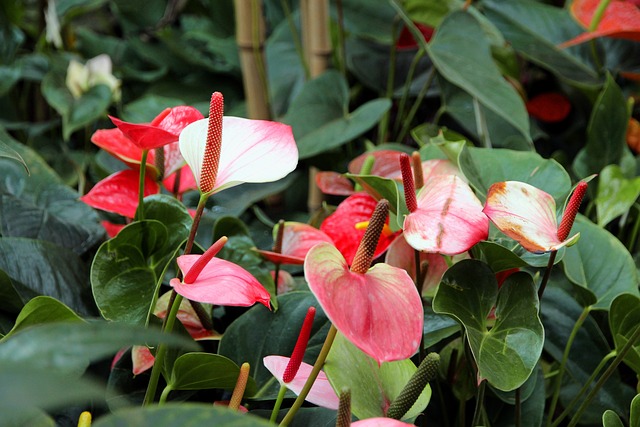
    Flamingo lily, Anthurium andraeanum

    The Flamingo Lily, scientifically known as Anthurium andraeanum, is a popular ornamental plant celebrated for its striking appearance and vibrant colors. Here are some comprehensive facts about this plant:

    Taxonomy and Origin

    Scientific Name: Anthurium andraeanum
    Common Names: Flamingo Lily, Laceleaf, Painter's Palette
    Family: Araceae
    Native Range: Native to the rainforests of Colombia and Ecuador in South America.

    Description

    Flowers: The plant is renowned for its glossy, heart-shaped spathes, which are often mistaken for flowers. The actual flowers are tiny and are found on the spadix, a spike that emerges from the center of the spathe. The spathes come in various colors, including red, pink, white, and shades of green.
    Leaves: The leaves are large, leathery, and dark green, with a prominent, glossy texture. They are typically heart-shaped or arrow-shaped.
    Height: Flamingo Lilies can grow to a height of 12 to 18 inches (30 to 45 cm) indoors, with leaves extending outward to a similar width.

    Growing Conditions

    Light: Prefers bright, indirect light but can tolerate lower light conditions. Direct sunlight can scorch the leaves and spathes.
    Temperature: Thrives in warm temperatures between 70-90°F (21-32°C). It is sensitive to cold and should be kept away from drafts and sudden temperature changes.
    Humidity: Requires high humidity levels, ideally between 70-80%. It benefits from regular misting or being placed near a humidifier.
    Soil: Prefers a well-draining, peat-based potting mix. A mix designed for orchids or aroid plants is ideal.
    Watering: Needs consistently moist soil, but it should not be waterlogged. Water when the top inch of soil feels dry to the touch.
    Fertilization: Benefits from a balanced, water-soluble fertilizer applied monthly during the growing season (spring and summer).

    Care and Maintenance

    Pruning: Remove dead or yellowing leaves and spent flowers to encourage new growth and maintain the plant's appearance.
    Repotting: Repot every 1-2 years or when the plant outgrows its pot. This is usually done in the spring.
    Propagation: Can be propagated through division or by taking stem cuttings. Division is typically done during repotting.

    Pests and Diseases

    Common Pests: Susceptible to common houseplant pests such as aphids, mealybugs, spider mites, and scale insects. Regular inspection and prompt treatment with insecticidal soap or neem oil can help manage these pests.
    Diseases: Can be affected by root rot if overwatered. Ensure proper drainage to prevent water from stagnating. Fungal and bacterial infections can also occur, often manifesting as leaf spots or blights.

    Toxicity

    Toxicity: Flamingo Lilies contain calcium oxalate crystals, which are toxic if ingested. They can cause irritation and swelling of the mouth and throat, as well as digestive upset. Keep the plant out of reach of pets and children.

    Cultural and Symbolic Significance

    Symbolism: The Flamingo Lily is often associated with hospitality, abundance, and love due to its heart-shaped spathes and vibrant colors.
    Use: Commonly used as a decorative houseplant and in floral arrangements. Its long-lasting spathes make it a popular choice for bouquets and centerpieces.

    Miscellaneous

    Longevity: With proper care, Anthurium andraeanum can live for many years, providing continuous blooms throughout its life.
    Varieties: There are many cultivars of Anthurium andraeanum, bred for variations in spathe color, size, and shape. Some popular varieties include 'Dakota', 'Pink Champion', and 'White Heart'.

    By following these guidelines and providing the appropriate care, the Flamingo Lily can be a stunning addition to any indoor garden.

    Monday, June 10, 2024

    False sunflower, Heliopsis helianthoides

    Heliopsis helianthoides, commonly known as the smooth oxeye or false sunflower, is a perennial plant native to North America. Here are some comprehensive facts about this plant:

    General Information

    Scientific Name: Heliopsis helianthoides
    Common Names: Smooth oxeye, false sunflower, oxeye sunflower
    Family: Asteraceae (Aster family)
    Type: Herbaceous perennial

    Description

    Height: Typically grows 3 to 6 feet tall (90 to 180 cm).
    Leaves: Leaves are opposite, ovate to lanceolate in shape, serrated along the margins, and have a rough texture.

    Flowers:

  • The plant produces bright yellow, daisy-like flowers.
  • Each flower head consists of yellow ray florets surrounding a central disk of yellow or brownish-yellow florets.
  • Blooms from mid-summer to early fall (July to September).
  • The stems are erect, somewhat branched, and may be hairy.

    Habitat and Distribution

    Native Range: Widely distributed across North America, including the United States and Canada.
    Habitat: Prefers prairies, open woods, roadsides, and fields. It thrives in well-drained soils and can tolerate a variety of soil types, including sandy, loamy, and clay soils.
    Hardiness Zones: USDA zones 3 to 9.

    Growth and Cultivation

    Sunlight: Prefers full sun but can tolerate partial shade.
    Soil:Well-drained soils; adaptable to a range of soil types.
    Watering: Drought-tolerant once established; regular watering promotes healthy growth.
    Propagation: Can be propagated by seeds, division, or cuttings.

    Ecological Importance

    Pollinators: Attracts bees, butterflies, and other pollinators.
    Wildlife: Provides food and habitat for various insects and birds.

    Uses

    Gardening: Popular in perennial borders, wildflower gardens, and naturalized areas due to its bright flowers and ease of care.
    Cut Flowers: The flowers are long-lasting when cut, making them suitable for floral arrangements.

    Varieties and Cultivars

    'Summer Sun': Known for its large, vibrant yellow flowers.
    'Prairie Sunset': Features orange-yellow flowers with a reddish tint in the center.
    'Bressingham Doubloon': A double-flowered variety with larger blooms.

    Care Tips

    Pruning: Deadheading spent flowers encourages continued blooming.
    Pest and Disease Control: Generally pest-resistant but can occasionally be affected by powdery mildew and aphids.
    Support: Taller varieties may require staking to support the stems.

    Interesting Facts

    Name Origin: The genus name "Heliopsis" means "sun-like" in Greek, referring to the sunflower-like appearance of the flowers. The species name "helianthoides" means "resembling a sunflower."
    Longevity: Can live for many years with proper care, making it a reliable choice for perennial gardens.

    Heliopsis helianthoides is a versatile and attractive plant that adds bright color and ecological benefits to gardens and natural landscapes.

  • Perennial pea, Lathyrus latifolius

    Lathyrus latifolius, commonly known as the perennial pea, everlasting pea, or perennial sweet pea, is a species of flowering plant in the pea family Fabaceae. Here are some comprehensive facts about this plant:

    General Characteristics

    Scientific Name: Lathyrus latifolius
    Common Names: Perennial pea, everlasting pea, perennial sweet pea, broad-leaved everlasting pea
    Family: Fabaceae (pea family)
    Genus: Lathyrus

    Description

    Growth Habit: A perennial herbaceous vine that can grow up to 6-9 feet (1.8-2.7 meters) in length.
    Leaves: Compound with a pair of leaflets, broad, oval to lance-shaped, with tendrils at the ends that help the plant climb.
    Flowers: Pea-like flowers that are typically pink, white, or mauve, appearing in clusters during the summer. They lack the fragrance characteristic of the annual sweet pea (Lathyrus odoratus).
    Fruit: Flat, green pods that turn brown as they mature, containing several seeds each.

    Habitat and Distribution

    Native Range: Southern Europe
    Introduced Range: Widely naturalized in North America and other temperate regions around the world.
    Preferred Habitat: Thrives in well-drained soils, including sand, loam, and clay, and is often found in meadows, roadsides, and along stream banks.

    Cultivation

    Hardiness Zones: USDA zones 4-8.
    Light Requirements: Prefers full sun to partial shade.
    Soil Requirements: Adaptable to various soil types but prefers well-drained soil.
    Water Requirements: Drought-tolerant once established but performs best with regular watering.
    Propagation: Can be propagated by seeds, division, or cuttings. Seeds should be scarified or soaked before planting to improve germination rates.

    Uses

    Ornamental: Popular in gardens and landscapes for its attractive flowers and climbing habit, often used on trellises, fences, and walls.
    Erosion Control: Effective in stabilizing soil and preventing erosion on slopes and embankments.
    Wildlife: Provides habitat and food for pollinators such as bees and butterflies.

    Issues

    Invasiveness: Can become invasive in some areas, spreading aggressively and outcompeting native vegetation.
    Toxicity: Seeds and other parts of the plant contain toxins that can be harmful if ingested in large quantities by humans or animals.

    Interesting Facts

    Lifespan: As a perennial, Lathyrus latifolius can live and bloom for many years with proper care.
    Historical Use: Historically used in traditional medicine for its purported diuretic and laxative properties, though it is not commonly used medicinally today.
    Non-Fragrant: Unlike the closely related Lathyrus odoratus, the flowers of Lathyrus latifolius do not have a notable fragrance.

    Overall, Lathyrus latifolius is a resilient and attractive perennial vine that can add visual interest to gardens and landscapes while also serving functional roles in erosion control and habitat creation. However, care should be taken to manage its spread in areas where it may become invasive.